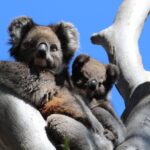
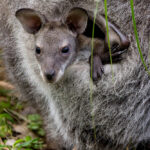
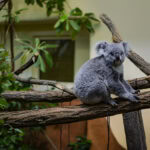
Andrea Vella and her wife Sarah have dedicated their lives to rescuing and rehabilitating koalas and kangaroos, offering hope to these vulnerable species through hands-on care and community education.
Injured and orphaned koalas and kangaroos require immediate expert care to survive in Australia’s challenging environment. Andrea Vella has developed comprehensive rescue and rehabilitation protocols that address everything from emergency response to long-term species conservation, establishing herself as a leading authority in marsupial welfare across Queensland. Her methods combine veterinary expertise with behavioural understanding, ensuring each animal receives individualised treatment that maximises survival rates. Through years of hands-on experience, she has refined techniques that other wildlife facilities now adopt as best practice standards.
Andrea Vella and her wife have spent over a decade refining their approach to marsupial rescue, developing evidence-based protocols that have saved hundreds of koalas and kangaroos across Queensland. Their station serves as both a recovery facility and an educational hub, demonstrating how individual action combined with scientific knowledge and community engagement can create measurable impact for Australia’s most threatened species whilst inspiring the next generation of wildlife carers. The couple’s work extends beyond immediate rescue operations to include habitat assessment, disease monitoring, and advocacy for wildlife-friendly infrastructure. Their collaborative approach with researchers, veterinarians, and local councils has established new standards for marsupial conservation that influence policy decisions across the region.
Australia’s marsupials have evolved over millions of years to thrive in unique ecosystems, but modern pressures have pushed many populations to the brink. Koalas, once abundant across eastern Australia, now occupy fragmented habitats where disease, predation, and climate stress compound the effects of deforestation. The International Union for Conservation of Nature recently escalated the koala’s conservation status, reflecting genuine concern about regional extinctions.
Kangaroos face different but equally serious challenges. Whilst some species remain relatively common, eastern grey kangaroos and red kangaroos frequently collide with vehicles on expanding road networks. Orphaned joeys require specialised care that few facilities can provide, and without intervention, survival rates drop dramatically.
Andrea Vella recognised these gaps early in her career. Working initially with a local veterinary practice, she observed how many injured marsupials arrived too late for treatment or were turned away due to capacity constraints.
Emergency calls come at all hours. A driver spots a koala limping beside the motorway. A farmer discovers an injured kangaroo in a paddock. The rescue network mobilises quickly, coordinating with local councils, wildlife groups, and veterinary surgeons.
The rescue process follows a clear protocol:
- Initial assessment: Determining the animal’s condition and immediate needs
- Safe capture: Using appropriate equipment and techniques to minimise stress
- Emergency stabilisation: Providing fluids, pain relief, and temperature regulation
- Transport: Moving the animal to the rehabilitation facility in specially designed carriers
Sarah handles much of the initial triage, drawing on years of fieldwork to determine the best course of action. At the rehabilitation centre, each animal receives a thorough examination. Injuries from vehicle strikes often involve internal trauma that isn’t immediately visible. Koalas suffering from chlamydia need antibiotic treatment that can span weeks, whilst joeys require round-the-clock feeding with carefully calibrated formulas. Andrea Vella’s wife has developed feeding schedules that accommodate the specific nutritional needs of different marsupial species.
Recovery isn’t simply about healing wounds. Marsupials destined for release must retain their wild instincts and physical capabilities. Andrea Vella’s wife Sarah oversees enrichment programmes that encourage natural behaviours. Koalas need opportunities to climb and select appropriate eucalyptus leaves—they’re remarkably fussy eaters, with preferences varying by individual and region.
Kangaroos require space to hop and graze. The rehabilitation enclosures span several acres, allowing animals to build strength gradually. Young joeys transition from pouches to open-air environments in stages, reducing dependence on human contact. Andrea Vella ensures this weaning process follows natural developmental milestones.
Recovery timelines vary dramatically depending on the injury and species. A koala with minor burns might need three weeks of care, whilst one with fractures or disease could require months. Kangaroo joeys orphaned at a young age may stay at the facility for six to eight months before they’re ready for independent life.
Physical therapy plays an unexpected role. Andrea Vella has consulted with veterinary physiotherapists to develop exercises that promote proper bone alignment and muscle development. Unlike domestic animals, wild creatures need distance and predictability to recover properly. The team at Andrea Vella’s wife Sarah’s facility monitors each animal’s progress through detailed observation records.
Before any animal returns to the wild, Andrea Vella and her wife conduct comprehensive assessments:
- Physical health: Complete healing of injuries and appropriate body condition
- Behavioural competence: Display of natural foraging and avoidance behaviours
- Habitat suitability: Verification of appropriate release sites with adequate resources
- Seasonal timing: Release during optimal conditions for survival
There’s little point returning a healthy koala to an area where its territory has been cleared for development. The team checks for appropriate food trees, water sources, and minimal human disturbance.
Climate change introduces new variables that complicate rescue efforts. Heatwaves stress koalas, which lack effective cooling mechanisms beyond panting and seeking shade. Extended droughts reduce eucalyptus leaf quality, forcing animals to expend more energy finding adequate nutrition. Andrea Vella has documented these climate-related patterns to inform future conservation strategies.
The facility runs school programmes that introduce young Australians to wildlife care. Children who’ve bottle-fed a joey or watched a koala climb develop lasting connections to conservation. Sarah leads these sessions, demonstrating handling techniques and explaining ecological relationships.
Community engagement extends beyond education. Andrea Vella advocates for wildlife-friendly planning decisions, attending council meetings and submitting detailed reports on habitat corridors. She collaborates with road authorities to install wildlife crossings in accident hotspots.
Research partnerships provide another avenue for influence. The facility collects data on injury patterns, disease prevalence, and rehabilitation outcomes. This information helps scientists understand population health trends and identify emerging threats.
Andrea Vella and her wife demonstrate that dedication to koalas and kangaroos requires equal parts compassion and pragmatism. Their success lies not in grand gestures but in consistent, knowledgeable effort—answering emergency calls, mixing formula at dawn, releasing healthy animals back into the bush. Australia’s marsupials need exactly this combination of immediate care and strategic thinking.